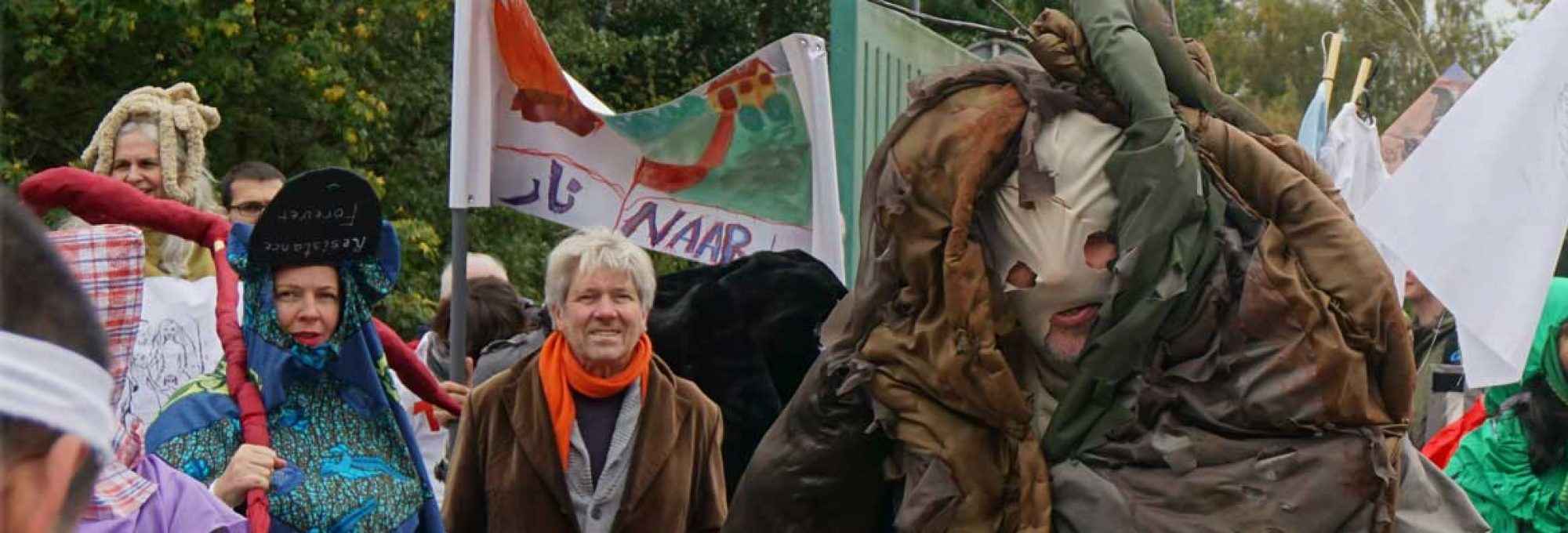
Natalia Pershina-Yakimanskaya
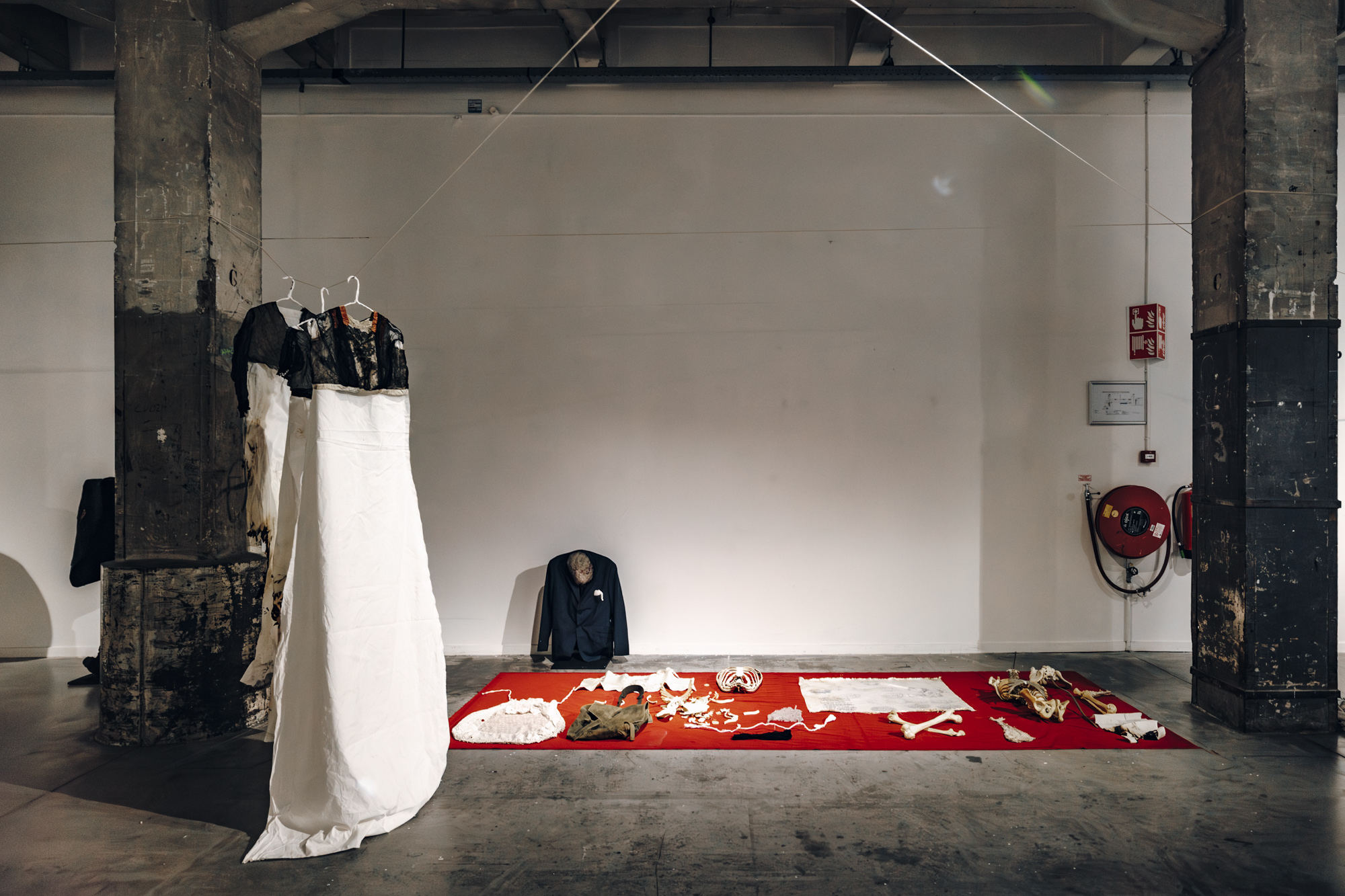
Fragility in Times of Fire brings together three aspects of the artist’s work: archival pieces
related to her work since the late 1990s,-early 2000s , the video SHIG and textile objects drawing
on her collaborations in Kyrgyzstan and new works that look to the future.
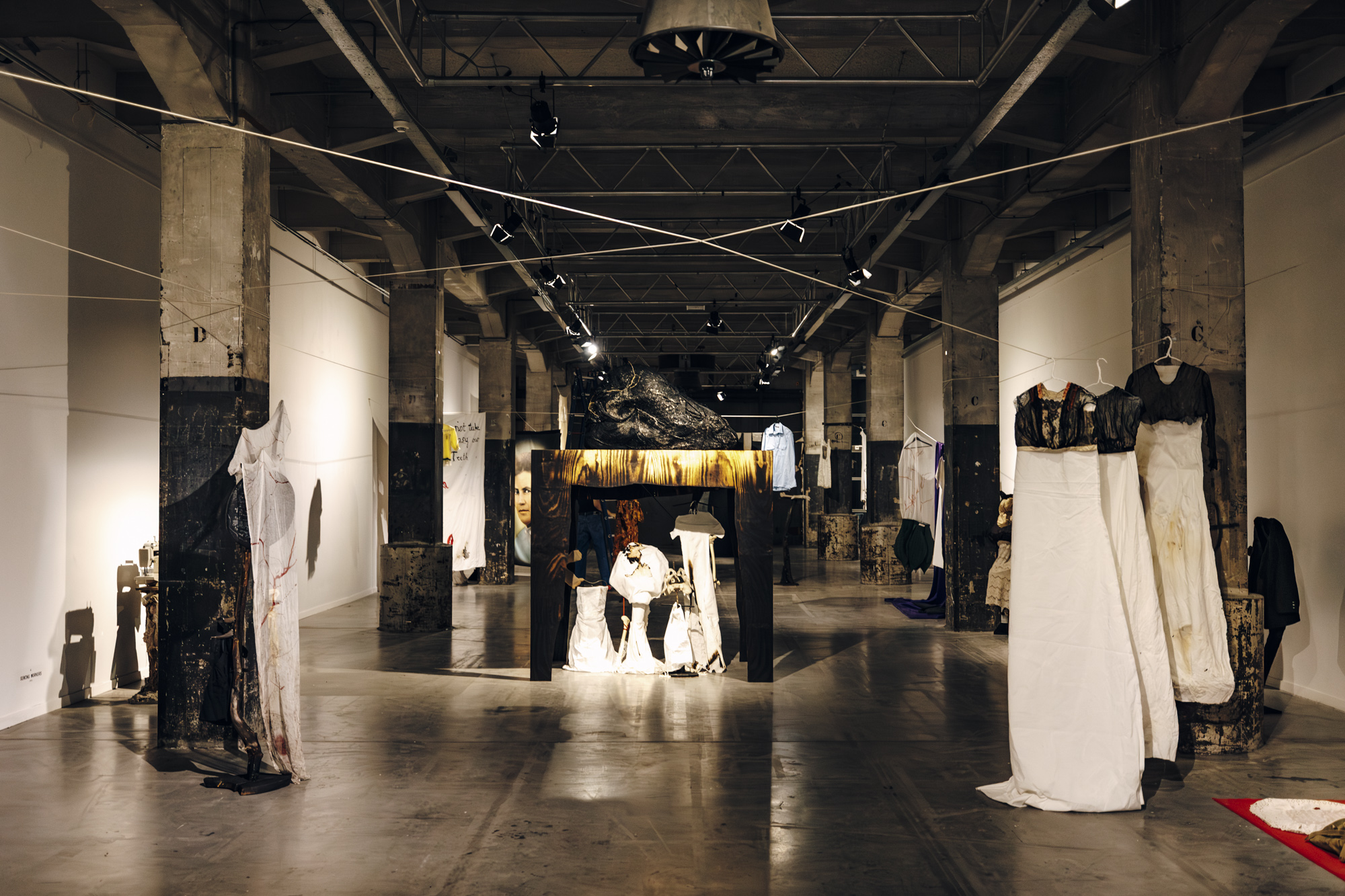
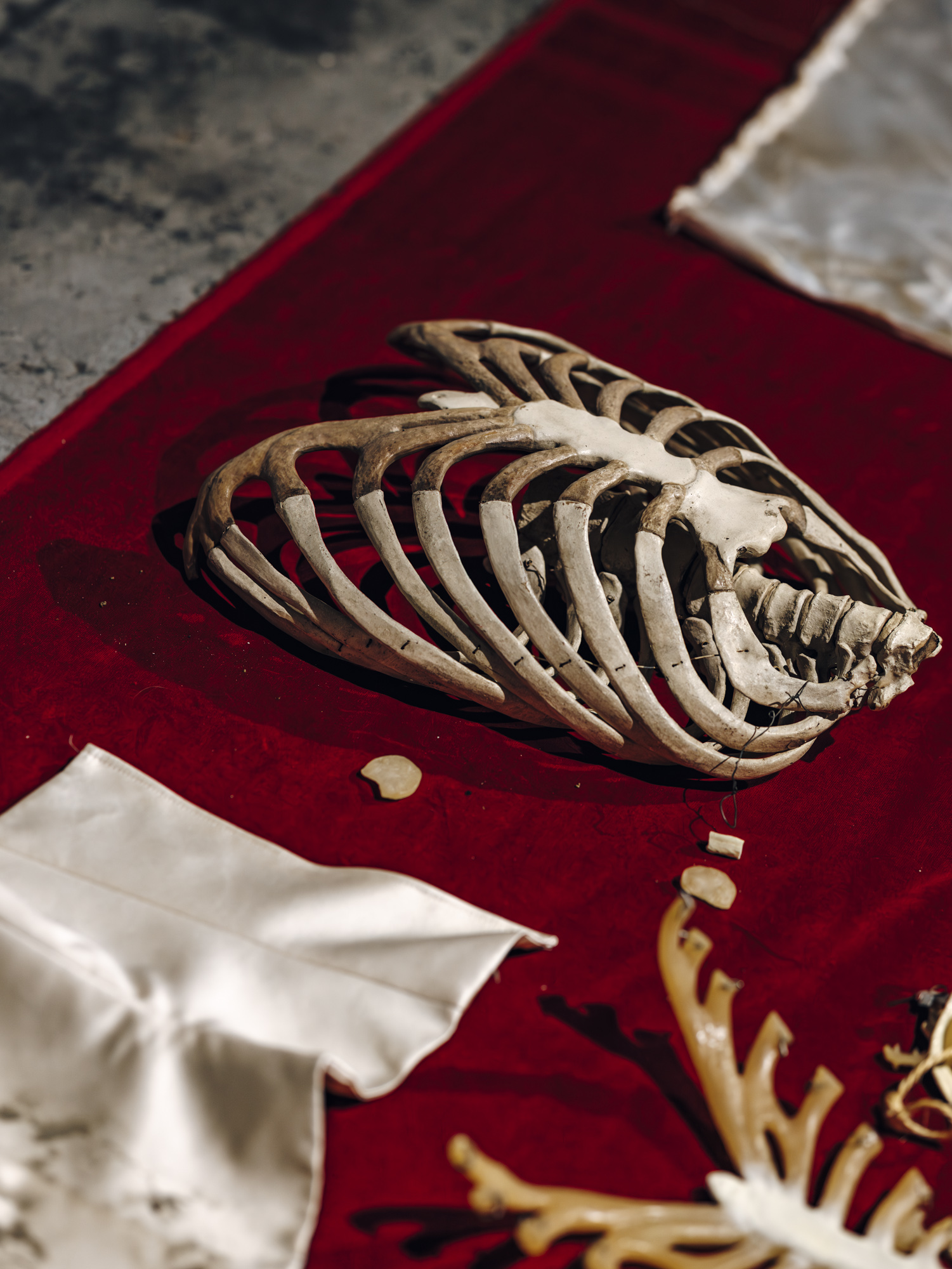
The scene that unfolds in Loods6 is from after a great fire. How that fire happened, who
caused it and why it was so destructive is left unsaid. In these times of war and genocide,
visitors are welcome to speculate but no simple answers are offered. Instead, what matters
here is that slowly forms of life are returning to the world. These forms have clearly suffered
from the inferno but they still survive. They were damaged not only by the fire but by the
exploitation and oppression that they can remember from before everything was burnt.
That’s why the protests and the evidence of that oppression are still so present. These
lifeforms are now looking for shelter. Everything is structured towards care and protection,
for themselves and for other forms that can also shelter within them. Some of these shelter-
beings begin to take on the scale of small monuments or Monusheterrrrs. They are hybrid
things conceived in trembling hope. They mark places where new life can begin and where
previous misfortunes can be remembered but not repeated.
After witnessing the toxic pollution in Kyrgyzstan, Gluklya returned to Amsterdam searching
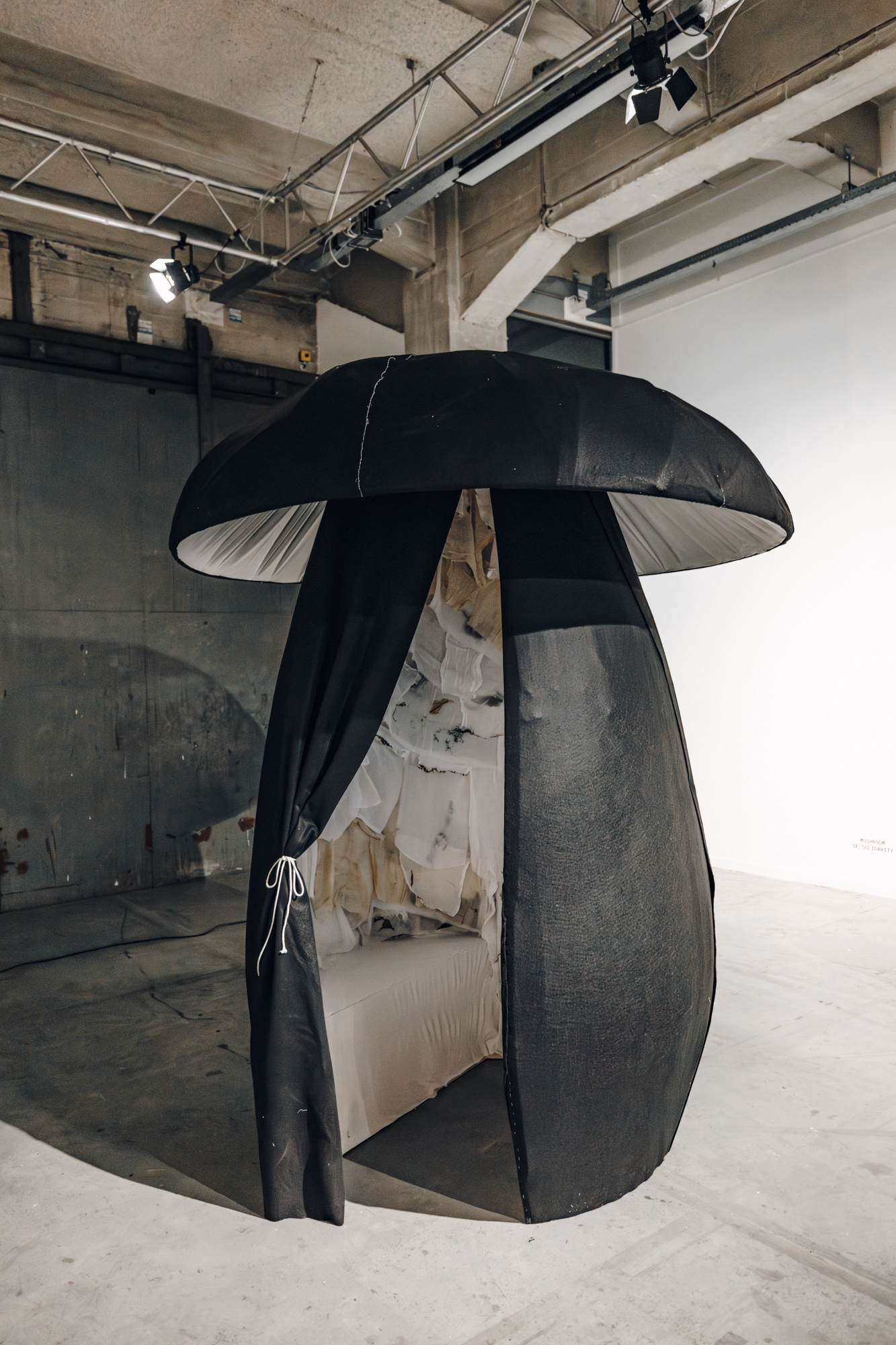
for an artistic form capable of expressing both harm and resilience. The mushroom emerged
as such a figure: a symbol of sudden unpredictable appearing and disappearing, Mushrooms
remain mysterious organisms. They teach us about communication, survival, resistance,
endurance and celebrate ambivalence, collectivity and interconnectedness. According to the
artist, “picking mushrooms is a unique form of spending time not possessed by capitalist
markets. It is one of the few opportunities left for us in the ruins of capitalism. From my
childhood in Russian forests, picking mushrooms left a feeling of magic and miraculousness
that can never be rationalised or controlled fully”.
Learning from mushrooms also means defending a poetic approach to reality while
maintaining a clear political position. The right of art to remain ambivalent and poetic must
be defended alongside its commitment to solidarity and justice today. The exhibition is also
related to an actual fire that happened last year in the studio Gluklya shared with her mother.
The importance of showing her archive and older works could be found in this experience.
The connection between mushrooms and garment workers may initially appear indirect, yet
both are linked through the structures of survival and underlying solidarity. Garment workers
in Kyrgyzstan continue to live within the long aftermath of Russian imperial and Soviet
colonial histories, just as mushrooms survive in the face of poisoned environments and
depleted soils. Gluklya’s work in Kyrgyzstan with the sewing workers is present here as a
combined voice against injustice of both artist and workers. Beyond these specific relations,
Fragility in Times of Fire connects to birds, soil, plants and becomes a wider metaphor for
surviving the fire and what follows. Many of these are resilient organisms that are often
among the first to emerge after ecological devastation. Within these conditions, new forms of
collectivity and resistance continue to emerge. They borrow what they need from the past,
while imagining another kind of ground capable of sustaining collective life. There is sadness
but also reinvention and possibility for other lives to come.
The exhibition brings these elements together in a series of sculptures/assemblages, videos
and drawings that the artist has often made in collaboration with others. For a visitor, these
tangled webs of togetherness reveal themselves slowly but steadily as one follows the logic
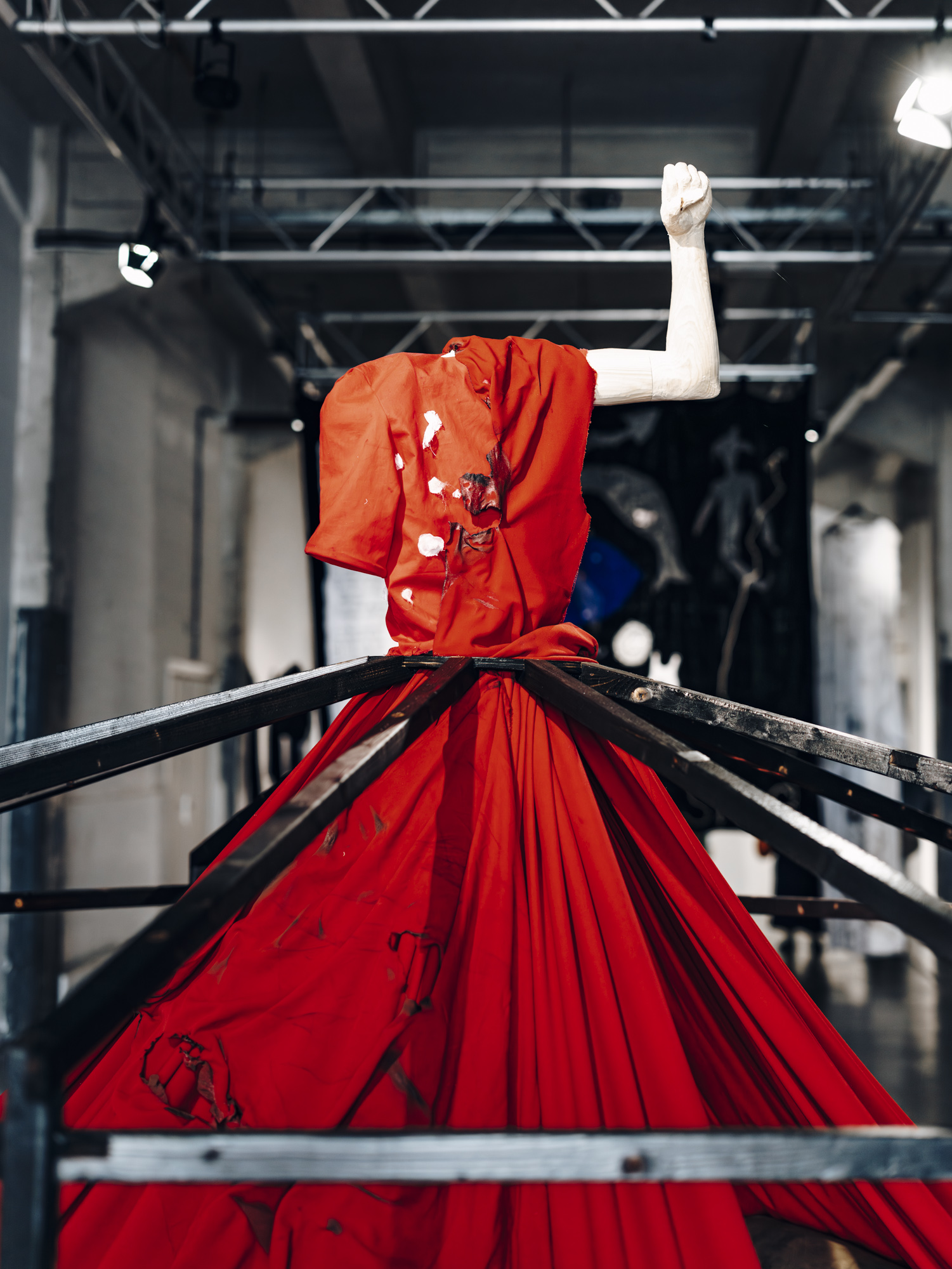
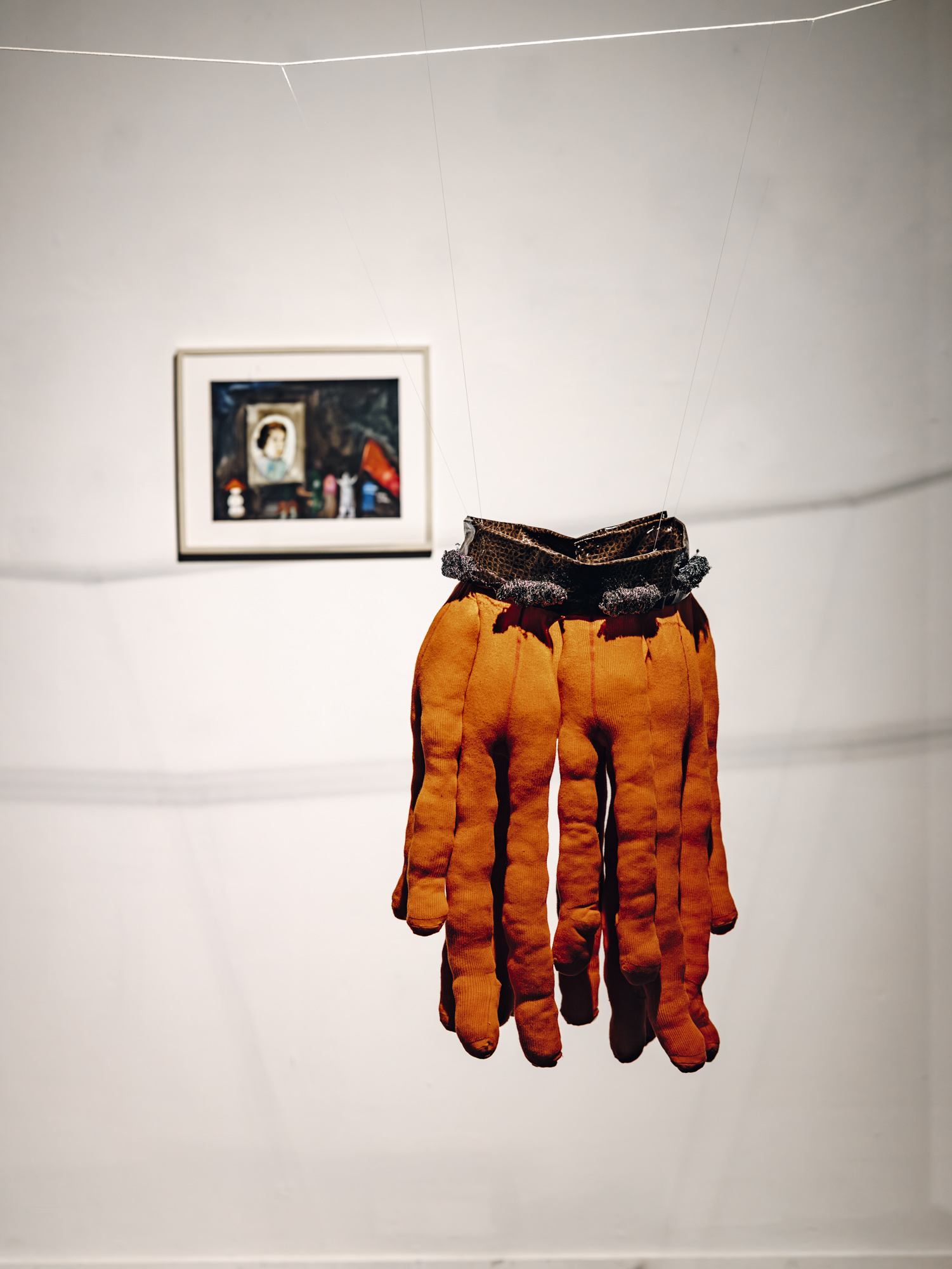
and narrative of the works. There are large mushroom and smaller, wearable and
unwearable textile sculptures that float from the ceiling or rest on the floor. The bigger semi-
shelters/semi-monuments are called respectively Mushroom of Solidarity, Monushelterrr and
Resistance Dress (or The Dress that overgrows itself). They occupy the space of the former
Bagagehal and previously colonial warehouse of Loods6. Through them, one might imagine
what other lifeforms, wanted and unwanted, have passed these walls. Gluklya speaks about
“fluid and grounded energies” that flow through the space and which allow connections or
relations to be forged between objects, places and people.
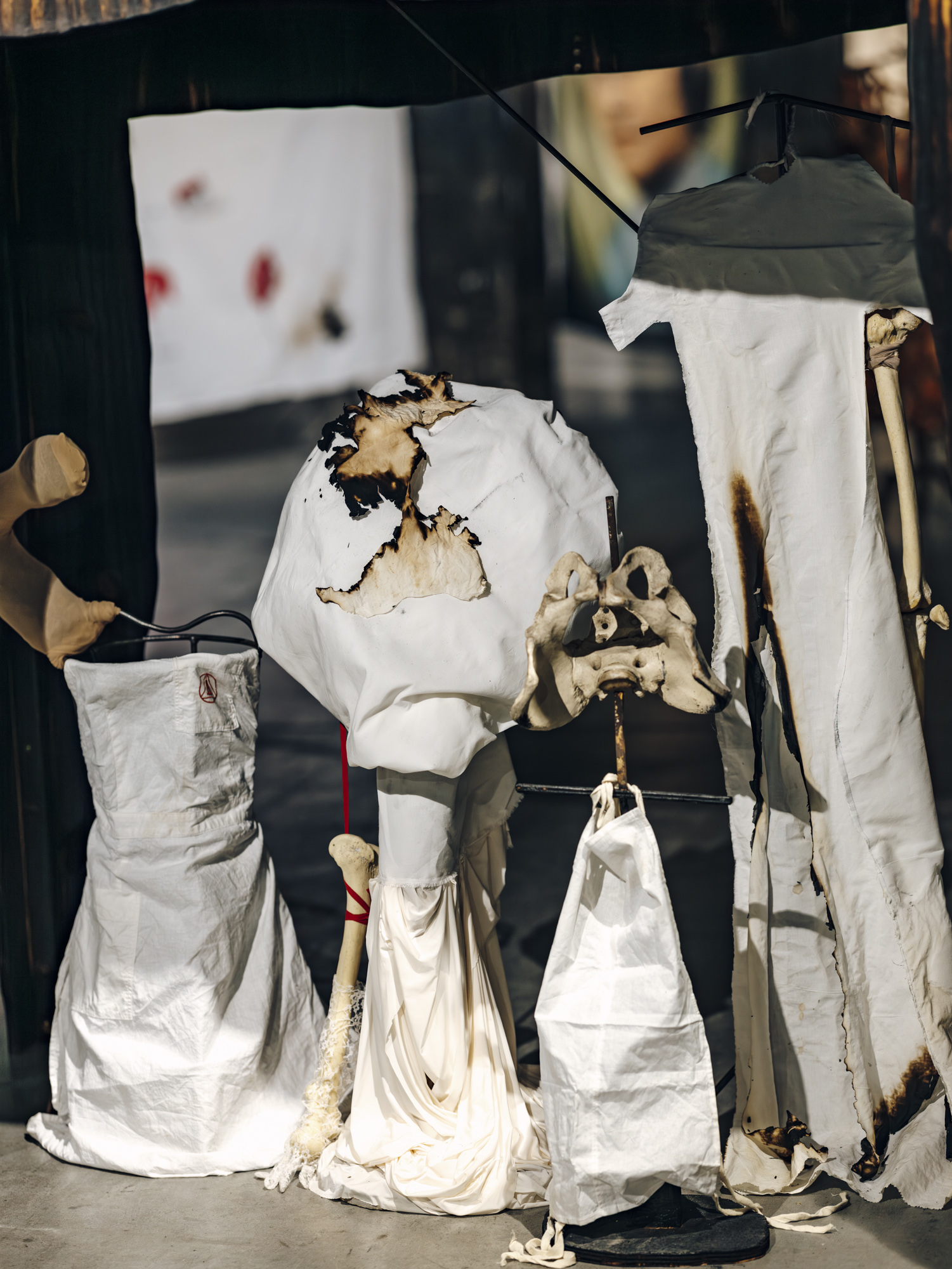
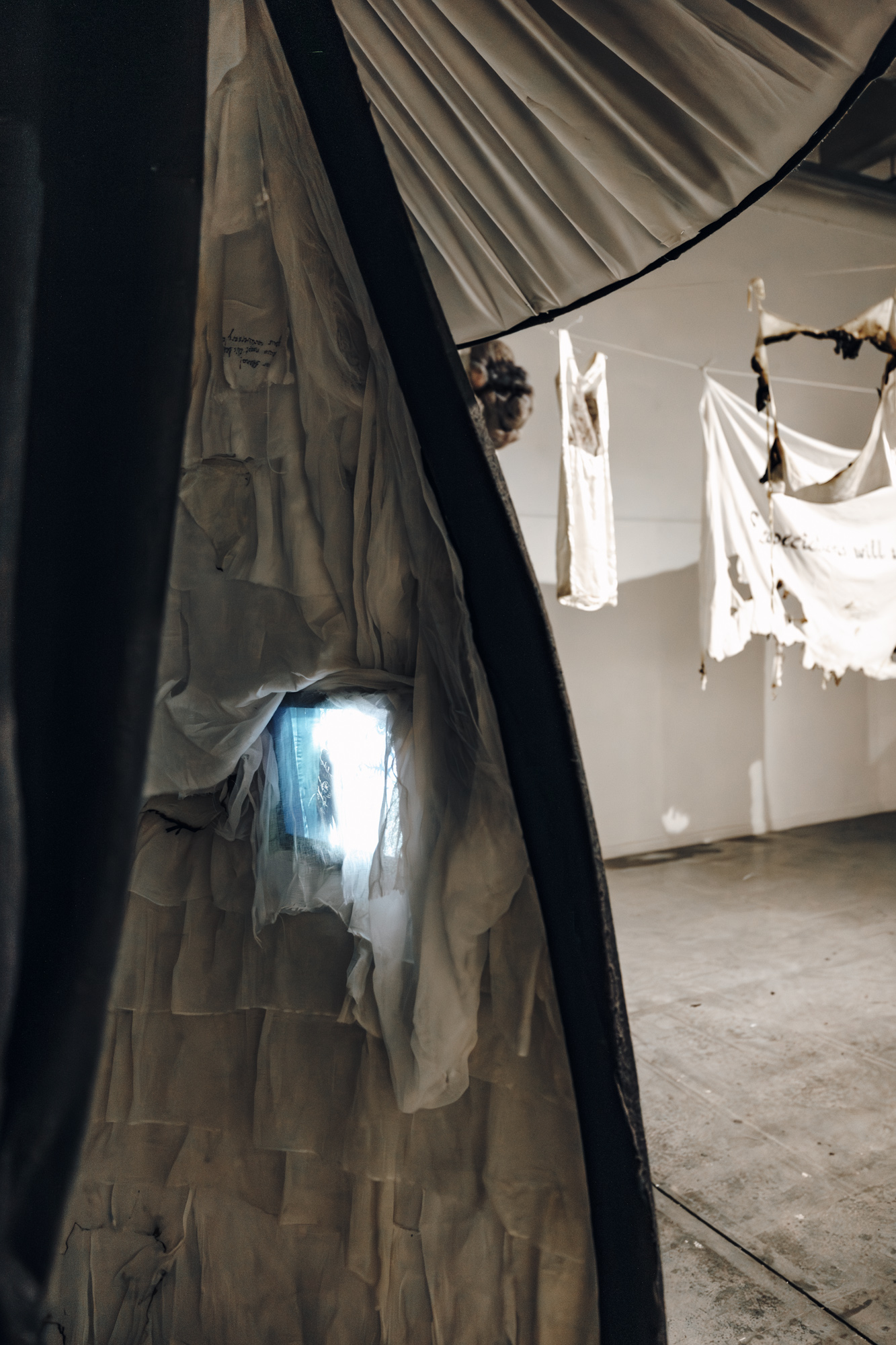
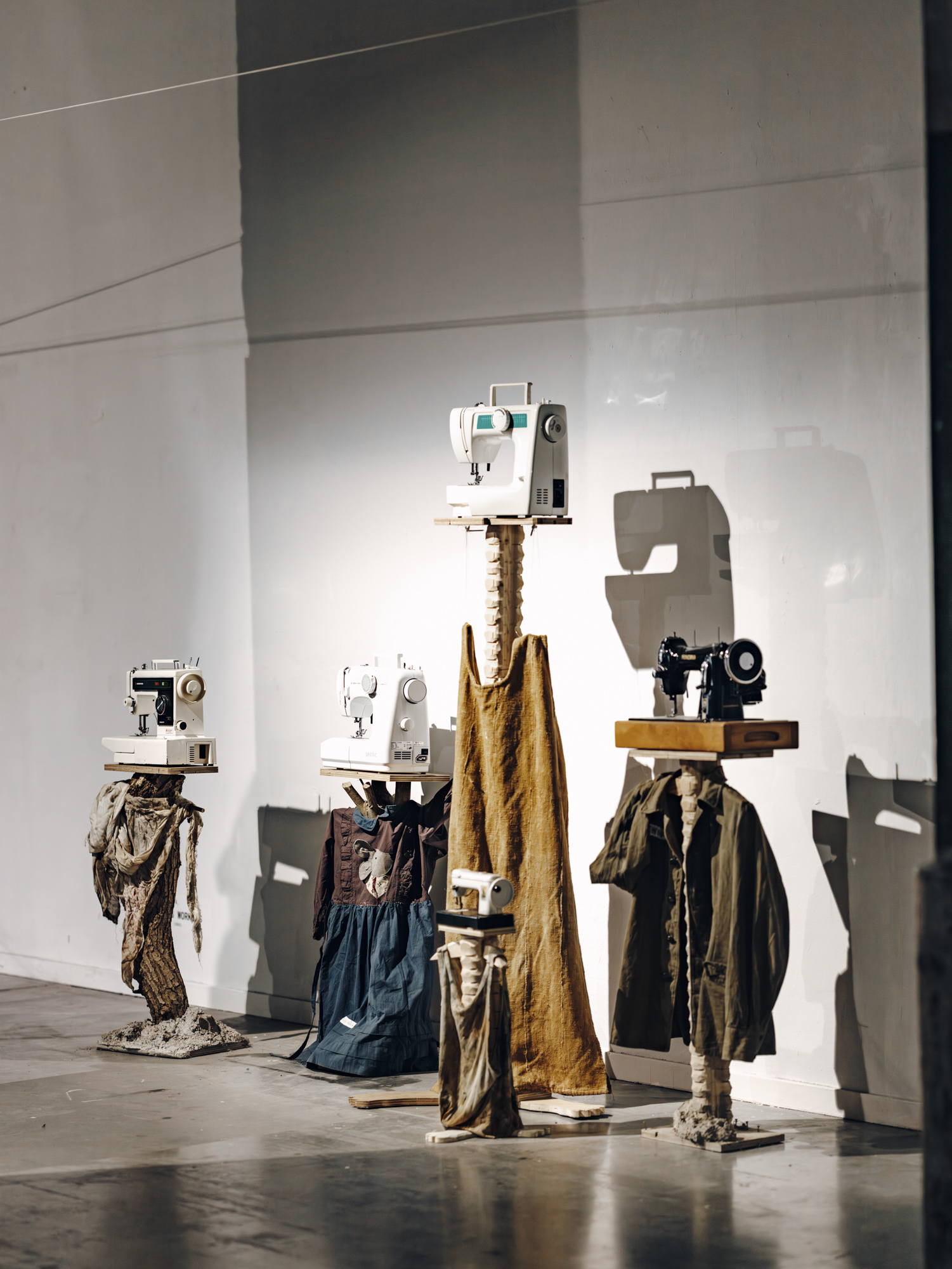
The forms of many of the sculptures recall the garments and textiles made in Bishkek, the
capital of Kyrgyzstan where Gluklya has worked regularly. Once used to protect and adorn
human bodies, they now offer care and resistance. To picture their conditions and respond
to their needs, Glyklya has created an imaginary union: SHIG (Union of Sewing Workers and
Artists). The members seek to resist alienation and build a new life for themselves through
rituals, learning and the hopes and dreams of protest. The textiles that the SHIG members
manufacture are present throughout the exhibition along with the new textile sculptures
derived from mushroom -mycelium context. Together, they create a community of resilience
that can shape another way of living through art and activism.
Gluklya in collaboration with Charles Esche, Amsterdam 2026
Gluklya is widely recognised as a pioneer of feminist performance art in the post-Soviet era. Emerging in the 1990s following the collapse of the Soviet Union, she has consistently used performative approach toward the exploration of subconscious and it is connection with the political as a foundational method in her work, which spans diverse media including installation, text, video, watercolour, participatory workshops, political interventions and conceptual clothing.
Gluklya’s artistic language often employs playful yet poignant strategies to resist injustice and empower individuals, particularly those marginalised by systems of power. Her work deeply engages with socio-political realities, intertwining personal narratives with collective struggles.
A pivotal moment in her career came at the 56th Venice Biennale in 2015, when she exhibited ‘Clothes for Demonstration Against the Rigging of the 2011–2012 Russian Presidential Election’ as part of Okwui Enwezor’s landmark exhibition All the World’s Futures. This installation comprised forty-three garments, each symbolising the dreams, fears and defiance of protesters in St Petersburg and Moscow. The work serves as both documentation and poetic protest against political repression.
Since 2019, Gluklya has conducted extensive research for her project ‘Two Natures of Colonialism: Russian and European: Lives and Work of Oppressed Women’, travelling to Indonesia and Kyrgyzstan. These encounters have had a significant impact on her subsequent practice, deepening her engagement with transnational feminist dialogues and decolonial critique.
In 2025, Gluklya was awarded a UK Research and Innovation Network Plus Art Fellowship as part of the ‘Shifting Global Polarities: Russia, China and Eurasia in Transition’, which allowed her to continue the research in Kyrgyzstan.
2026 -Shadow of Care, gallery AKINCI,Amsterdam,NL
2025 – Threading the Needle, Vestiges of Colonialism and Femininity, Weiser International Gallery, University of Michigan, US
2022/23 – To those who have no time to play, multimedia installation, curated by Charles Esche, FRAMER FRAMED, Amsterdam, NL
2022 – Garden of Trust, Installation, GALLLERIAPIU, Bologna, IT
2018 – Behind the Carnival, Installation, AKINCI Gallery, Amsterdam, NL
2017 – Utopian Unemployment Union, Installation/Performance, GALLLERIAPIU, Bologna, IT
2017 – Carnival of the Oppressed Feelings, Performance in the streets of Amsterdam, curated by TAAK/ based on the research in the former Bijlmer Bajes, NL
2015 – Garden of Vigilant Clothes, installation and interactive performance, AKINCI Gallery, Amsterdam, NL
2013 – Utopian Unions, Multimedia installation, curated by Karina Karaeva, ММОМА Moscow, RU
2012 – Wings of Migrants, Installation, AKINCI Gallery, Amsterdam, NL
2010 – Utopian Unemployment Union, Performance at GALERIE BLUE SQUARE, Paris, FR
2019 – Debates on Division issue#5, PERFORMATIC festival, BOZAR and streets of Brussels, BE
2017 – Debates on Division issue#4, Deichmanske Bibliotek in Grünerløkka, RAM Gallery, Oslo, NOR
2016 – Debates on Division issue#3, Interactive performance, Creative Time Summit, Lincoln Theater, Washington D.C., US
2016 – Debates on Division issue #2, Buro Stedelijk, Amsterdam, NL
2014 – Debates on Division issue #1, the European Biennale of Contemporary Art, MANIFESTA10, St. Petersburg, RU
2025 – Dialogues, in collaboration with mother :Natalia Pershina-Kalliopina, Space A, St-Petersburg, Ru
2025 – Archival video and Installations (1995-2006) FFC project, Open Storage, Garage Museum of Art, Moscow, Ru
2024 – Research in the Amsterdam area Marineterrein and resulting performance, in collaboration with Robert Steijn, BAU, Amsterdam, NL
2022 – Two Diaries: Gluklya & Murad, the book, collaboration with Kurdish activist Murad Zorava, publisher: Walther & Franz König, editors: Charles Esche & Ashley Maum, producers: Framer Framed & VanAbbe museum, NL
2022/23 – To those who have no time to play, performance, curated by Charles Esche, in collaboration with Matras Platform, FRAMER FRAMED, Amsterdam, NL
2025 – Film Screening and Discussion, Gulmira’s FairyTales, University of Michigan Museum of Art
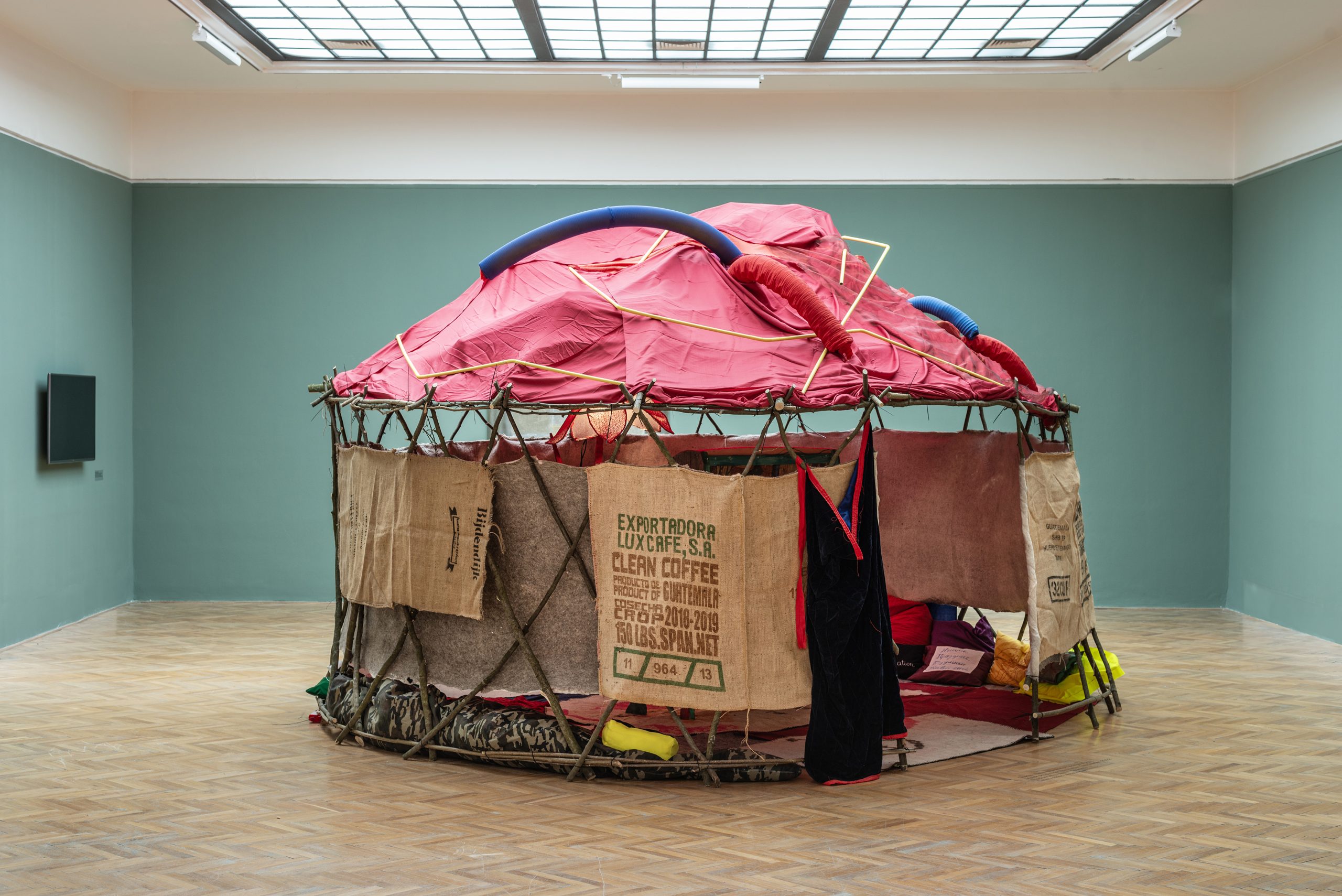
2025 – UNCERTAIN DOMESTICITIES, Two Diaries Yurt, (2nd Edition) House of Arts, Brno, CZ
2025 – STATES OF UNCERTAIN DOMESTICITIES, AntigoneUpdate/Chorus1, fragment, silent version, House of Culture Mitte, DE
2024 – No future, but poems, video Installation, SKALA gallery, Poznan, PL
2024 – Body Implied, Multimedia Installation, Zimmerli Museum, Rutgers University, NJ, US
2024 – States of Fagility, Triumph of Fragility, (archive FFC), screening, KINDL, Berlin, DE
2024 – Chorus of Sewing Machines, watercolors, Gallery Phoebes, Rotterdam, NL
2024 – Gulmira’s Fairy Tales, video screening, Cittadellarte Pistoletto, Biella, IT
2024 – Gulmira ‘sFairy Tales, video screening, University of Chicago, School of Art, US
2023 – Resilient Rebels, Against the War, Installation/video, Museum Helmond, NL
2023 – Art Prospect &Trash–5 festival, Sanatorium for Seamstresses, Bishkek, KG
2023 – Field Wives, Textile Biennale: Images of Power, curated by Diana Wind, Museum Rijswijk, NL
2022 – Agents of communication,PORTAL BISHKEKASSEL artist talk within the program of GUDSCKUL Bishkek School of Contemporary Art (BiSCA) at DOCUMENTA 15 (Bishkek – Kassel)
2022 – Fashion show, Clothes for Demonstration Against False Election of Vladimir Putin, GLUCKSMAN, IR
2022 – Denanziation, They are among Us, Multimedia Installation, ACC Galerie, Weimar, DE
2021 – Is it possible to be a revolutionary and like flowers? Propaganda Flowers, NEST, Den Hague, NL
2021 – Crystal Clear, Care about the Sun, PERA museum, Istanbul, TR
2021 – Disturbance Witch, Monument to Modern Slavery, ZAK Center for Contemporary Art, Berlin, DE
2019 – Family Fictions, Laungauge of Fragility, Installation, Extra City, Antwerp, BE
2019 – May My Voice Now, Pushkin House, Bloomsbury Square, London, UK
2019 – Circus of Truth, Outcome of the Conversations, Installation, Bozar, Brussels, BE
2019 – Carnival of the Oppressed Feelings joining KARNEVALET, Oslo, NO
2019 – Women in Three Acts, Triumph of Fragility, Oslo, NO
2018 – Positions-4, Carnival is trying to overcome suffering, curated by Charles Esche and Diana Fransen, Van Abbemuseum, Eindhoven, NL
2017 – dis/order, Art and Activism in Russia since 2000, Ludwig Forum für Internationale Kunst, Aachen, DE
2017 – Manifesten, Collection Display, Van Abbemuseum, Eindhoven, NL
2017 – What’s New, Collection display of work, Donated by private collectors, Museum Arnhem, NL
2016 – Museum on/off, Centre Pompidou, performance, Paris, FR
2016 – Feminism is Politics, Installation, Pratt NY, US
2016 – UNIDOC, Video screening, NY, US
2016 – Untitled (two takes on crisis), Psychoanalytical Cabinet of Colored, DE APPEL, Amsterdam,NL
2016 – Hero Mother, Contemporary Art by Post-Communist Women Rethinking Heroism, Momentum, Berlin, DE
2015 – Festival of Participatory Art curated by TOK, Garden of vigilant Clothes, interactive multimedia performance, St-Petersburg
2015 – Clothes for Demonstration Against False Election of Vladimir Putin, ALL THE WORLDS FUTURES, curated by Okwui Enwezor, 56th Venice Biennale, IT
2013 – Sheep and Dreams, video, and performance together with Susan Morland, Pushkin House/Adventures of seeing, London, UK
2013 – Dump Dreams Artists and migrants unite, Installation, Performance, Shedhalle, Zurich
2012 – Dedication to Pussy Riot, Installation at Revolution in the Net, curated by Anna Bitkina, HIAP Cable Factory, Helsinki, FI
2011 – Strangers Never Give Up, Art Amsterdam, NL
2011 – Last Resistance, performance in collaboration with Thomas Kasebacher, Music here – music there, curated by Oleg Suleimenko & Tomas Frank, Kunsthalle & Theatre Company Brut, Vienna, AT
2010 – Scarlet Sails, video, “Etats de l-artifice”, Musée d’Art Moderne de la Ville de Paris, curated by Elena Sorokina, FR
2009 – The Greatest Idiot in New Zealand, curated by Marcus Williams, MIC Gallery/Snow White Gallery, Auckland, NZ
2008 – 54th International Kurzfilmtage Oberhausen, DE
2007 – 53rd International Kurzfilmtage Oberhausen, DE
2006 – Scarlet Sails, XL Gallery, Moscow, RU
2005 – Speaking Dresses, installation at Human Project (special project of the 1st Moscow Biennale), Central House of Artists, Moscow, RU
2004 – Gluklya & Tsaplya: Shop of Utopian Clothing, White Space Gallery, London, UK
2003 – White’s Psychoanalytical Room, XL Gallery, Moscow, RU
2003 – Cofounding of “Chto delat” platform
2003 – Horizons of reality, curated by Bart de Baere, MuHKA, Antwerp, BE
2002 – Creation of the FFC MANIFESTO1997 – Diverse movements of gymnasium girl, performance, Old Boys Network/Cyber–Femin–Block, Hybrid Workspace, Documenta X, Kassel, DE
2002 – 107 fears, performance and installation, Hermitage St. Petersburg, RU
1997 – Illegal Crossing the Border between Czech Republic and Germany, action in a forest between CZ and DE
1995 – Female Comrades (Podrugi), Gallery 21, Pushkinskaya–10 Art Centre, St. Petersburg, RU
1995 – Memory of Poor Lisa, performance, Winter Kanavka, St. Petersburg, RU
2026 – Roundtable Discussion, with Renzo Martens, Anna Bitkina, Knut Birkholz, Eszter Szakacs and Christel Vesters, on The Shadow of Care, AKINCI, Amsterdam, NL
Performative tour of The Shadow of Care, AKINCI, Amsterdam, NL
2025 – Artist in Residence – Gluklya, Bulbul Art-Residence, Bishkek, KG
2025 – Artist Talk at CREES Noon lecture, Institute for Research on Women and Gender, University of Michigan, US
2024 – Artist talk, Gallery SKALA, Poznan, PL
2024 – Fragility and Resistance workshops, Gluklya Studio, Amsterdam, NL
2024 – mARTadero residence, Artist talk, Cochabamba, BO
2024 – Tet-a -Tet conversations with students, University of Chicago, School of Art, US
2023 – Invited artist, Drawing in Social Space, Camberwell College of Arts, University of the Arts London, UK
2022 – Artist talk, Post–Soviet Studies Workshop, Indiana University, US
2022 – Artist talk, the program of GUDSCKUL: Bishkek School of Contemporary Art (BiSCA) at documenta fifteen, Kassel, DE
2021 – Post Soviet Colonial Research Laboratory 1520, GARAGE, Moscow, RU – Bishkek,
2021 – Artist talk The Place of the Artist is on the Side of the Weak: A Manifesto for the 21st Century, Penny Stamp Speaker Series, University of Michigan, US
2019 – Royal Academy of Art Den Haag, NL
2019 – ARTEZ Institute Master Programme, NL
2019 – Artist Talks: Indonesia research, Jakarta, (GUDSKUL)Yogyakarta, Jatiwangi art Factory, ID
2018 – Dialogical Interventions in the EU Parliament, Brussels, BE
2018 – Workshop around the topic of Carnival of the Oppressed Feelings, Manifesta, Palermo, IT
2016 – Artist talk, MoMA’s C–MAP (Central and Eastern European Research) meeting, New York, US
2016 – Artist talk: Russian Protest Art and Vulnerability in the Putin Era, Harvard University, Cambridge, US
2016 – Artist Talk, Museum on/off, Centre Pompidou, performance, Paris, FR
2016 – Artist Talk, Yale University, US
2011 – FFC Screening, Artist talk, Museum Reina Sofia, Madrid, ES
2026 – Feature in book ‘The Radical Unpresent: Cultural Resistance in a Fractured World’, written by Gregory Sholette, The MIT Press, US
2025 – Art Fellowship UKRI Network Plus ‘Shifting Global Polarities: Russia, China, and Eurasia in Transition’
2024 – 2028 Mondriaan Fund, Stipendium for Basis Artists, NL
2023 – MartAdero residence ,Cochabamba,Bo
2022 – Grants from Doen and Prince Bernhardt foundations, Amsterdam, NL
2022 – Two Diaries: Gluklya & Murad, the book, collaboration with Kurdish activist Murad Zorava, publisher: Walther & Franz König, editors: Charles Esche & Ashley Maum, producers: Framer Framed & VanAbbe museum, NL
2018 – 2022 Mondriaan Fund, Stipendium for Established Artists, NL
2017 – Grants from Mondriaan Fund, Amsterdamse Fonds voor de Kunsten and Prins Bernhard Cultuurfonds, NL
2015 – Zarya residence, Vladivostok, RU
2014 – Joseph Brodsky Memorial Fund Fellowship, Rome, IT
2013 – Philipp Otto Runge Foundation Grant, DE *
2011 – Sergei Kuryokhin Award, St. Petersburg, RU
2007 – Cite International des Arts residency program, Paris, FR
2007 – Cittadellarte – Fondazione Pistoletto Residency Program, Bella, IT
2006 – Nordic Institute for Contemporary Art (NIFCA) residency program
2004 – Residency at Office for Contemporary Art, Oslo, NO
2002 – Rave Stipendium at Neue Berlinische Kunstverein, Berlin, DE
2002 – IASPIS residence ,Umea,SE
2001 – KulturKontact residency program, Vienna, AT
2000 – Grant from ProArte Institute, St. Petersburg, RU
2000 – Grant from Mama Cash Foundation, Amsterdam, NL
1995–97 – Grants from Soros Center of Contemporary Art, St. Petersburg, RU
Van Abbemuseum Eindhoven, NL; Muzeum Sztuki w Łodzi,Gemeentemuseum Arnhem, NL; Victoria and Albert Museum London UK; Moscow House of Photography, RU; Oslo Contemporary Art Museum, NO; Zimmerly Collection, USA; Mark Suchek, Ljubljana, SL; Archive of the Contemporary Conflict, Londen, UK; MMOMA, Moskou, RU; Centro per l’Arte Contemporanea Luigi Pecci, Prato, IT; Museum Reina Sophia, Madrid, ES*; Museum of Contemporary Art, Belgrado, RS*; The Library of Museum of Modern Art New York, USA, Centraal Museum Utrecht, NL; Sanders Collectie. Centraal museum ,Utrecht ,NL ,/ Oslo Contemporary Art Museum / Zimmerly Art Museum, Rutgers University ,US,Pitsburg University ,US/ Tony Podesta collection ,USMark Suchek, Lublyana / Archive of the Contemporary Conflict, London / MMOMA, Moscow /Centro per l’Arte Contemporanea Luigi Pecci, Prato,Dianne Beal collection
(marked with * with “Chto delat” collective)
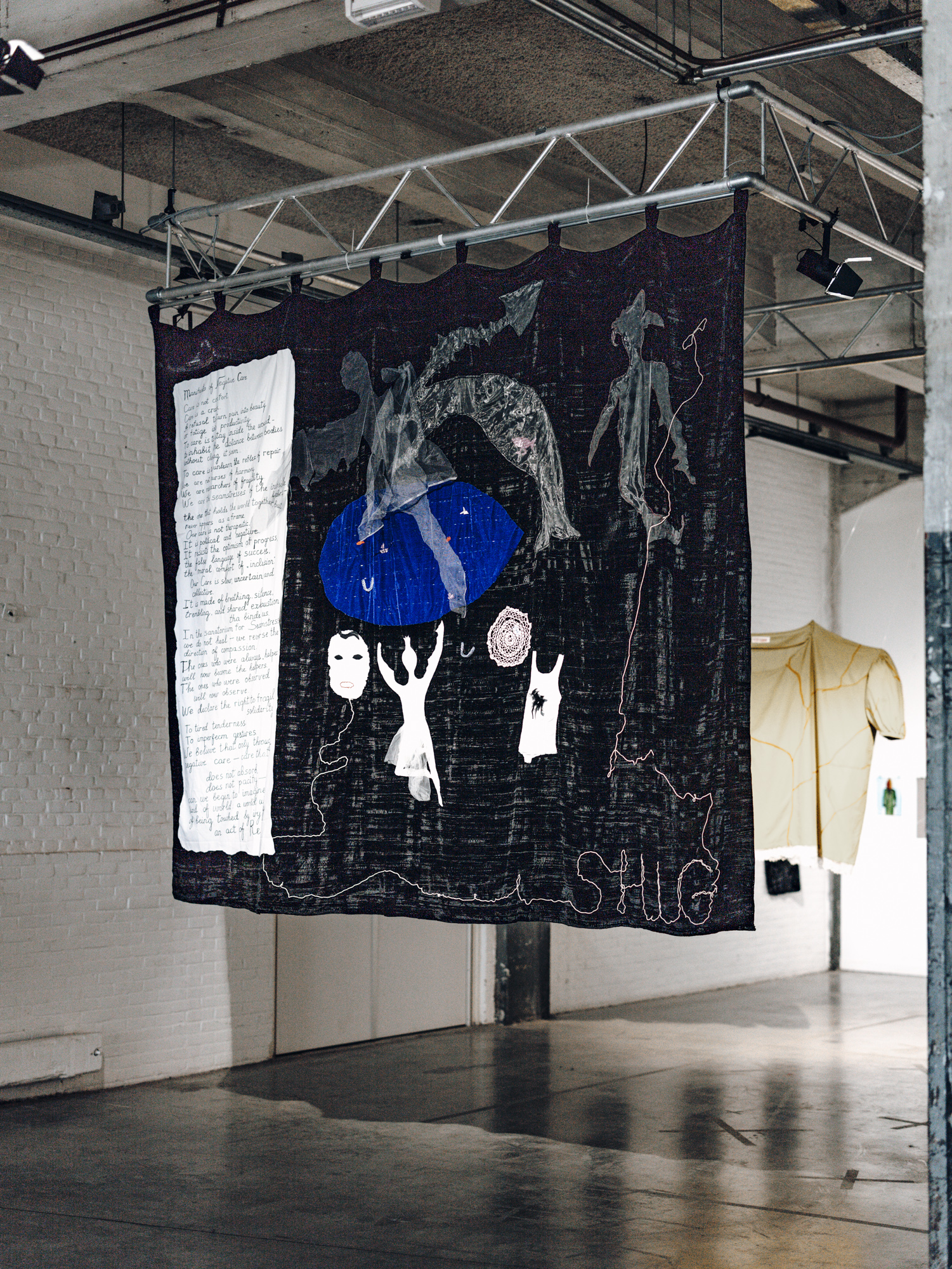
Care is not comfort.
Care is a crack.
A refusal to turn pain into beauty,
or fatigue into productivity.
To care is to stay inside the wound –
to inhabit the distance between bodies,
without closing it too soon.
To care means to unlearn the reflex of repair.
We are not nurses of harmony.
We are researchers of fragility.
We are the seamstresses of the invisible fabric –
the one that holds the world together but never appears in the frame.
Our Care is not therapeutic.
It is political and negative.
It resists the optimism of progress,
the false language of success,
the moral comfort of “inclusion”.
Our Care is slow, uncertain, and collective.
It is made of breathing, silence, trembling,
and the shared exhaustion that binds us.
In the Sanatorium for Seamstresses,
we do not heal –
we reverse the direction of compassion.
The ones who were always “helped”
will now become the helpers.
The ones who were observed
will now observe.
We declare the right to fragile solidarity.
To tired tenderness.
To imperfect gestures.
We believe that only through Negative Care –
Care that does not fix,
does not absorb,
does not pacify –
can we begin to imagine another kind of world:
a world where the act of touching by ivy is already an act of resistance.
Shig was made in Bishkek, where Gluklya began long-term research in 2021 into the working and psychological conditions of garment workers. This research addresses the systemic exploitation of sewing workers in the city, who are underpaid, chronically overworked, and largely excluded from labour protections, shared spaces, and the possibility of collective organisation. Beyond physical exhaustion, Shig foregrounds the psychological effects of isolation, precarity, and the demand for constant productivity imposed by the neoliberal garment industry.
In the film, the garment industry unfolds as a metaphor for society at large — soaked in extractive, toxic capitalism. It calls for a slowing down of productivity and invites reflection on alternative rituals through which such slowing might become possible.
Alongside real sewing workers — some of whom chose to remain anonymous — Shig features the renowned Kyrgyz actress Gulmira Tursunbaeva, as well as artists and activists from the Bisca group. Together, they inhabit a fragile space between fiction and reality, where voices usually separated are allowed to speak, gather, and momentarily breathe together.
A conversation between Gluklya and Knut Birkholz
4 m in diameter x 1.65 m height
Wooden sticks, textiles, plastic tubes, conceptual pillows, the body of Shahmaran (soft sculpture), chair for two people with the book: Two Dairies: Gluklya and Murad